
Baby Week
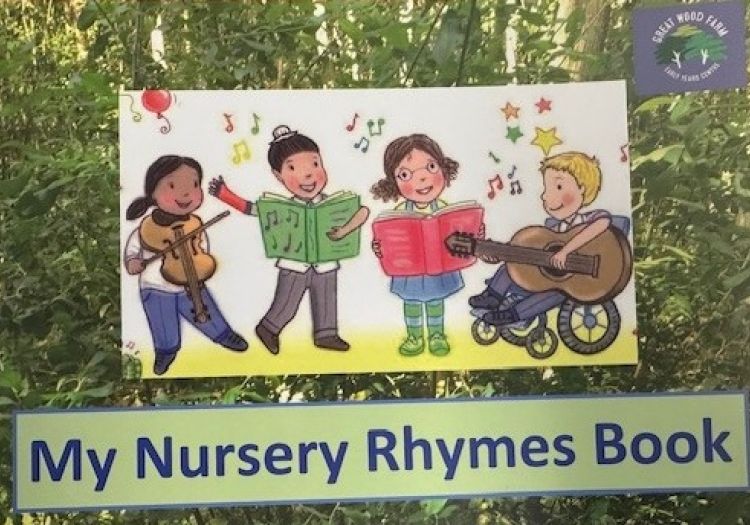
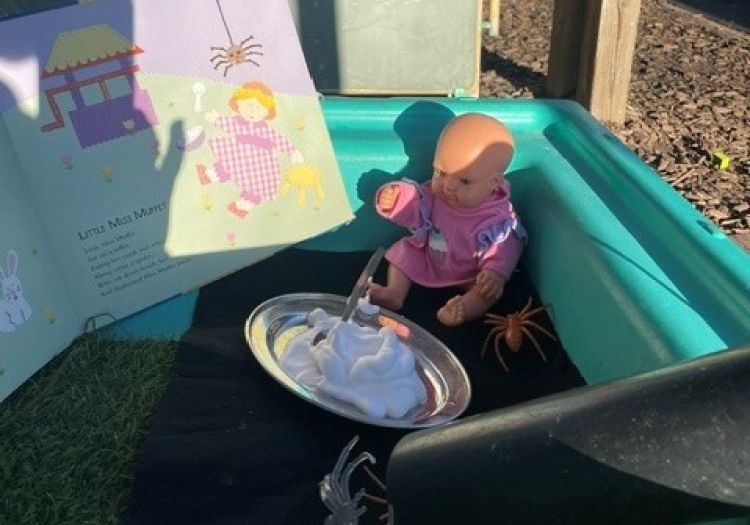
Baby week is a national campaign bringing together different services across the UK, and it is growing across the country of places that are getting involved. The aim is to promote the best start in life, celebrate early childhood and connect families with practical support. This year’s theme is ‘Chat, Play, Read with me’
We decided this is a brilliant idea to not only showcase what we do in nursery to promote early communication but also what you can do at home too, and also working in partnership with parents to see what you get up to at home.
We have sent out a google form to parents to collect their ideas to help us to reflect on what different families do at home too:
Feedback: What is your child/children's favourite nursery rhyme or song? (This could be a pop song)(Or a song that instantly calms them)
Baa baa black sheep, Row the boat, Old McDonald, Twinkle twinkle, wind the bobbin up, Skindamrink, Twinkle twinkle, lavenders blue, La La Lu (from lady and the tramp), Wind the bobbin up/ heads shoulders knees and toes, If your happy and you know it (hand clapping!), Baby sensory (say hello to the sun) or a song called bubble bubble (be like a bubble)
What was the last thing you spoke to your baby or child about?
- by age 1, children recognise about 50 words
- by age 3, children recognise about 1,000 words
- by age 5, children recognise about 10,000 words
No topics are too big or too small to talk to your child about, even from the youngest of ages, the benefits of constantly talking your child throughout the day are huge, from nappy changing narrating what you’re doing to driving in the car talking about what you can see or going to the shop, simple day to day language enables children to build on their vocabulary and their knowledge. Wonder aloud, as you’re going about your day to day tasks wonder aloud about what you are doing or going to do, children will pick up on this vocabulary. If a child talks to you, repeat back what they say, or model how to say something correctly, similarly, expand on what they say ‘I see a car’ could be changed to ‘I see a big blue car on the road’, this is expanding their vocabulary skills, using descriptive language, this could be further changed to ‘on a bumpy road’. Point to a picture and name what you see, introducing children to new vocabulary, making a reference to a picture, or an object, or visual cues.
You should also give your child time to respond, allow them time to pause and think before rushing to answer for them, this allows them the time to think about the word they want to use and empowers them rather than shutting them down. Alongside this we should ensure that we narrate a child’s play sensitively, allowing them to be the leaders of their own play, this is something we do so well with our Planning in the Moment approach, we add to the children’s play by enhancing the environment but not taking over.
Studies show that when babies hear speech, the parts of the brain that control mouth movement become activated. This happens even before they can talk, early communication ques are such an important part of positive communication skills and allowing children to grow within a language rich environment, from the youngest of age it can be quite daunting to know where to start with playing/interacting with such a tiny little human, but it is also such an exciting opportunity for developing strong communication and language skills, whilst making it fun for everyone involved. For the smallest of babies it is important to begin to show them the world from a different perspective, moving them into different places and positions. There are many other ways to communicate including words, body language, facial expressions, actions and songs.
Feedback: How does or did your baby tell you what they need/needed before they can /could use words?
“mama” and gesticulating that they wanted me, Pointing or gesturing; for example if they’ve hurt themselves pointing where, hungry or wanting a snack making a mouthing sound, Pointing/ hand gestures, Some use of Makaton or pointing, Sounds, babbling, gestures, pointing, eye contact, crying when little, Grunt, She doesn’t yet apart from crying…. But we are trying to implement baby sign language, Crying and body language, routine made certain gestures or cries more obvious to their reason.
It is important to be responsive and enthusiastic to the children, and show an interest in them and what they are doing, don’t be afraid to get down to the children’s level and join in with them, it is important to be responsive to the baby or the child, notice if a child is trying to get your attention and respond positively, this helps to build bonds and allow the child to feel confident, comfortable and safe and when they feel like this they are more likely to excel.
Feedback: favourite free/low cost place to take your child?
The park, The Spinney, Being out in the garden; climbing frame, ball games, helping with gardening, Feed the ducks at the local pond/ lake, Going for walks, mark making, building dens, going to the park, Messy play! Moon sand, cooked spaghetti, dough, Water play
The chat, play, read with me scheme has put on lots of online and local events for families for free, some of these are at local children’s centres or libraries, things don’t have to cost the earth for a family day out or a couple of hours out of the house, always have a look at your family hubs or local libraries for events or even just a trip to your local library to pick a book!
Feedback: Favourite family books?
Hairy Mclary, We’re going on a bear hunt, the hungry caterpillar, wonky donkey, the gruffalo, we don’t have just 1! Little Red Riding Hood, The Tiger Who Came to Tea, Bear Hunt, Faraway tree, Hospital dog, Tiger who came to tea, where the wild things are.
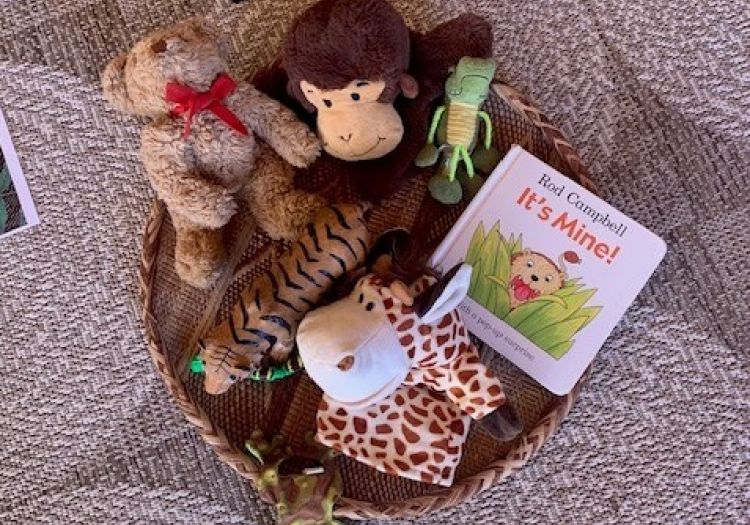
Never be afraid to read the same book more than once, there are many findings behind why it is positive to read the same book more than one, one of the main ones is that is allows children to feel secure, they will feel secure within the predictability of a well-known story, life for a little one feels easier and more manageable for them when they know what is coming next, and the routine of sitting with a well-known person reading the same book will also help to make them feel secure. Studies have been carried out on three year-olds to compare vocabulary knowledge of children who read the same story repeatedly and those who read different stories that contain the same vocab. The children who read the same story numerous times learnt more new words than the others and learnt them faster. The theory is that hearing the new words in the same context repeatedly reinforces the child’s understanding of those words. Many studies have shown that exposure to books at home improves academic achievement, so whichever book your child is currently fixated on, encourage them. Despite the fact you may have read it 100 times before, it still pays to show enthusiasm and excitement at the prospect of reading it again. You are modelling your relationship with books and your enthusiasm will also boost your child’s confidence that they made a good choice which earned your approval.
Feedback: What is your child/children's favourite game to play with you?
Building, making and dancing, tickling, throwing in the air, chasing, general touch play games, dominos, hide and seek, train tracks, doctors, what’s the time Mr Wolf, duck duck goose, puzzles, chase, peek a boo, building towers, singing, dancing and copycat.
Through these skills of ‘chat, play and read’ with me you are helping your child to develop their cognitive, physical and emotional development alongside helping them to build friendships, empathy and learn to share their emotions.
Always remember how every child is different, and will do things at their own pace in their own time- there is no rush!
https://babyweek.co.uk/all-events/